 ١
١Avito
High traffic and strong familiarity support fast discovery. Its broad, transactional structure leaves little space for the story and value of handmade work.
١ / Opening · Afus · ٢٠٢٦
A marketplace, brand and growth engine that gives Morocco’s independent artisans one place to be discovered.
٢ / The Context
After I delivered products for clients across Europe, the United States, the Gulf and India, Afus raised a different question: what would create a digital home for Moroccan craft?
Morocco has extraordinary makers across knitting, pottery, wood, leather, jewellery, weaving and more. Their work is abundant. Discovery remains fragmented across social feeds, classifieds, messages and personal recommendations. Each artisan has to build visibility alone.
Afus, “hand” in Tamazight, provides shared infrastructure: a place where makers can open a shop, present their work professionally, manage orders and grow without the prerequisite of an established social audience.
Media prepared for later
Moroccan craft and artisan landscape
٣ / The Market
Avito, Facebook Marketplace and Instagram shaped the audience’s expectations for product discovery, trust and direct seller contact.
١High traffic and strong familiarity support fast discovery. Its broad, transactional structure leaves little space for the story and value of handmade work.
 ٢
٢Social familiarity makes the service accessible. Presentation, trust signals and seller tools vary widely between listings.
 ٣
٣Established makers gain strong reach through visual content. New artisans face the added demands of audience development, frequent publishing and DM-based sales.

« The opportunity centred on credible participation: clear value, accessible tools and a level of effort that respected the artisan’s time. »
Media prepared for later
Competitive interface audit
Media prepared for later
Trust and behaviour map
٤ / The Foundation
The first product was a focused landing page designed to explain the proposition, gather sign-ups and measure whether artisans and buyers wanted a dedicated platform.
Discovery timeline
١ month
I mapped visual references, craft culture and the balance between modernity and tradition.
I analysed marketplace behaviour, audience habits and the gaps between discovery and purchase.
I spoke with active artisans and prospective sellers of handmade crafts.
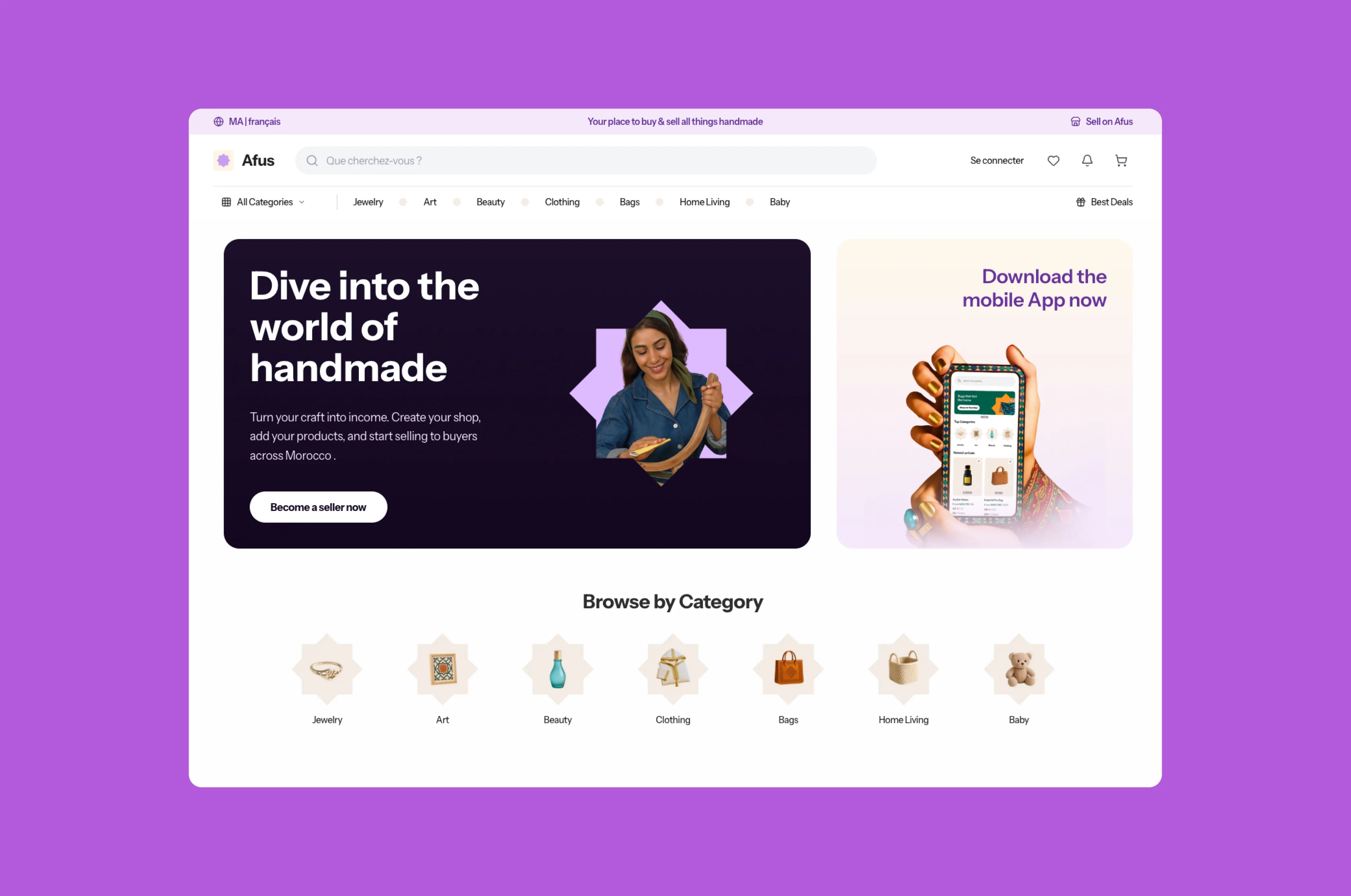
This phase established a durable product principle: explain the benefit before requesting effort. Registration served as one milestone toward a visible shop, a published first product and a credible path to buyers.
« Product ownership requires a clear reason to exist and a solution capable of delivering on that promise. »
٥ / The Marketplace
The marketplace uses an editorial presentation to elevate handmade objects and familiar commerce patterns to support an audience accustomed to Moroccan classifieds and social platforms.
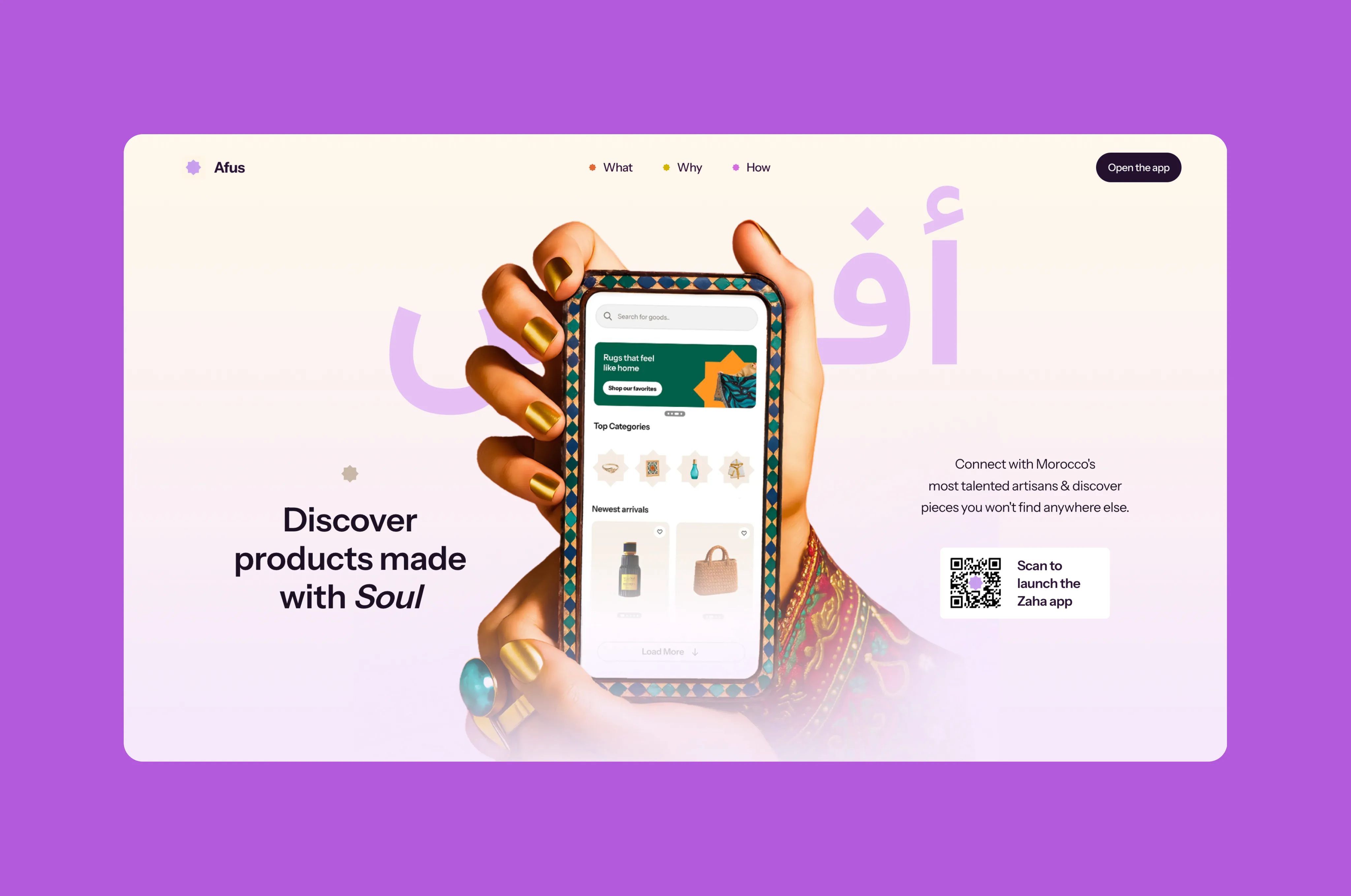
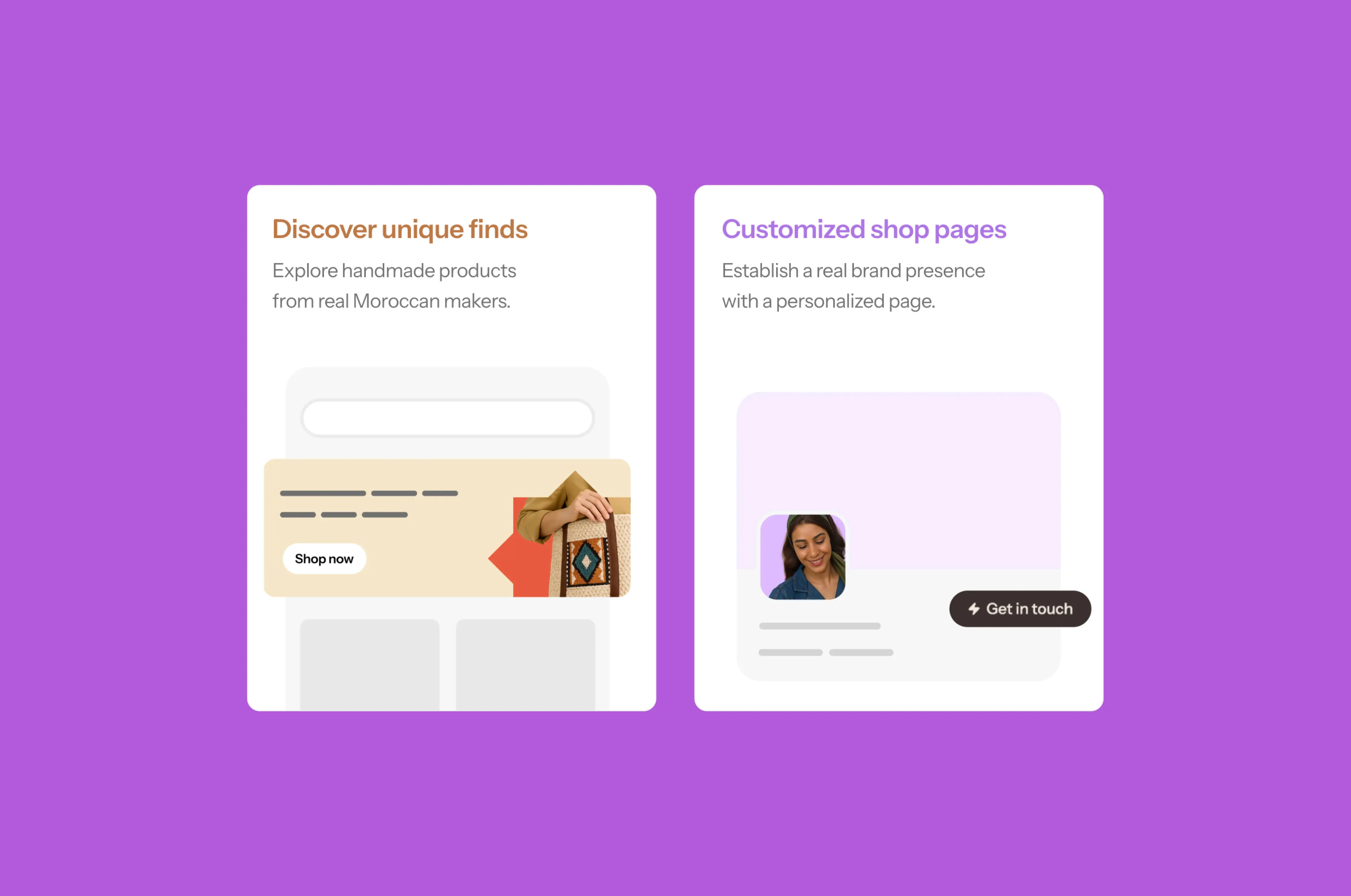
Product discovery balanced categories, craft techniques and maker identity. Photography held the central role. Clear pricing, location and fulfilment information reduced the uncertainty common to purchases through DMs.
The initial product expression gave knitting too much prominence. Post-launch usage exposed that bias. I expanded the content and category system to give pottery, woodwork and other forms of savoir-faire a stronger place in the first impression.
Mobile-first discovery
Maker-led storytelling
Clear trust cues
Inclusive craft taxonomy
٦ / The Seller System
Analytics showed that 80% of users navigated on mobile. Tests revealed that shop creation at the start demanded commitment before the flow established momentum.
The stronger onboarding flow began with the handmade object. A product image created immediate progress and encouraged prospective sellers to complete the product details.
I moved account and shop creation to the final steps, after the seller had invested in the product presentation. This sequence reduced the psychological weight of opening a shop and made it the natural completion of the flow.
Begin with the work the artisan is proud to show.
Add its story, price, inventory and variations.
Save the progress with a short account step.
Complete identity, location and shop details last.
Media prepared for later
Seller dashboard overview
Media prepared for later
Product creation and variations
Media prepared for later
Order tracking and management
« Variations formed part of the core product logic. Every size, colour and finish received a clear combination of price, availability and inventory. »
٧ / The Identity
Purple and warm beige introduced creativity, distinction and contemporary energy. Rounded, Arabic-influenced borders added a subtle traditional rhythm while preserving a contemporary product identity.
The identity extended beyond the interface. I designed Afus’s Instagram posts, campaign assets and videos as one system for product education, artisan recruitment and social storytelling.
٨ / The Launch
The classic chicken-and-egg problem informed each product decision. Buyers need variety; artisans need evidence of buyer demand. The launch combined product delivery, education and consistent community development.
A week of posts prepared in advance to sustain a consistent rhythm.
Videos and paid acquisition tested messages that could recruit new artisans.
Instagram conversations made questions, hesitation and excitement visible.
Media prepared for later
Launch campaign and Instagram system
٩ / The Learning Loop
Hotjar heatmaps, Vercel analytics, bug reports, direct messages and early-user conversations formed one continuous research system.
٨٠٪
of visitors used mobile. This evidence established the need for radically short seller onboarding.
+٦٠٪
registrations in the first hours after a new educational modal was introduced.
١ loop
observe behaviour, find the story behind the number, change the experience, measure again.
The About page and active social presence still produced the same question in DMs: “How does this work?” Conventional marketplace architecture separated products from explanation, and users stayed within the product feed.
I introduced a long, immersive modal on arrival. It combined social proof, purpose and guidance within the landing experience. This deliberate pattern addressed the platform’s specific education and liquidity challenge.
Media prepared for later
Immersive education modal and analytics
« Data supplies the evidence. Product judgement reveals the user story within it and turns that evidence into growth. »
١٠ / The Epilogue
Afus expanded my understanding of product development. I defined the proposition and delivered the solution through cold outreach, frontend optimisation, database migrations, campaign planning, support and customer feedback.
The beta exceeded expectations and attracted a community of artisans, many of them women. Real usage validated the premise: Moroccan makers value shared infrastructure, and a disciplined learning loop can serve them with increasing precision.
« I took responsibility for the entire journey, from the first product hypothesis to adoption, and applied every discipline the product required. »
Every craft
deserves a stage.